14%
of the world’s population suffers from migraine1
1 in 3
women are affected by Migraine3 and most go undiagnosed2

Migraine is the second leading contributor to the global burden of neurological diseases1

Migraine is the leading cause of disability in young women of reproductive age, according to the Global Burden of Disease 20213
>1B people
worldwide experience migraine, according to the Global Burden of Disease 20211
Migraine occurs most frequently in women of childbearing age, between 15 and 49 years old3
What is Migraine?
Migraine is a disabling neurological condition that manifests itself through intense, recurrent headaches, which are usually located on one half of the head1, with a significant impact on quality of life4.
The pain is very intense, throbbing and worsens with simple head movement5. A migraine episode can last between 4 and 72 hours and may be accompanied by nausea, vomiting and photophobia/phonophobia2.
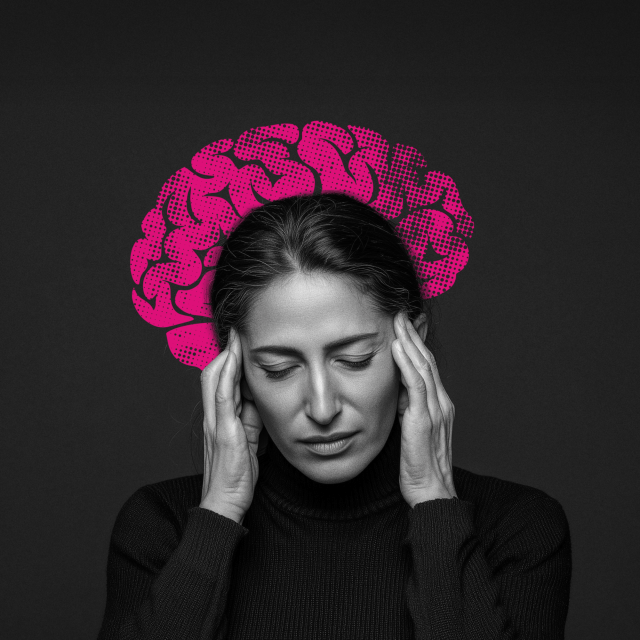
What categories of people are affected by migraine?
Migraine is more common in women than in men and occurs predominantly between the ages of 15 and 493. It can begin in childhood and, in females, migraine episodes can be precipitated by hormonal fluctuations2.

What are the most common triggers?
Depending on each individual case, migraine could be triggered by various factors, among which the most commonly suspected are:
- Physical or mental stress, relaxation after stress6
- Hormonal changes (during menstruation, ovulation and pregnancy)4
- Sleep disorders (excessive sleep or insufficient sleep)4
- Certain foods (too much caffeine, aspartame, tyramine and chocolate)4,5
- Weather changes.4
- Exposure to bright or flashing lights or strong odors4
- Skipped, delayed meals4
- Intense physical exercise4
- Drinking too much alcohol4

How common are migraines?
It is estimated that one in 7 people suffers from migraine, with one billion people affected by migraine globally, according to the Global Burden of Disease 2021.1

What are the symptoms of migraine?
Migraine symptoms are varied, but the most common are:
- Pulsating pain, of moderate or severe severity, most often involving only half of the head or being felt behind the eye2
- Nausea that may be accompanied by vomiting4
- Sensitivity to light, noises, and smells2,4
- Visual disturbances (aura): there may be flashes in the eyes, zigzag lines – in the case of migraine with aura4
How many types of migraine are there?
Migraine has two major types7:
Migraine without Aura
Migraine without aura is a clinical syndrome characterized by specific headache features and associated symptoms, such as nausea, vomiting, and sensitivity to light and sound.
It is a recurrent Headache disorder that manifests itself in attacks lasting 4-72 hours. Typical characteristics of the headache are: unilateral location, pulsatile quality, moderate or severe intensity, aggravation by routine physical exercise and association with nausea and/or photophobia and phonophobia.
Migraine with Aura
Migraine with aura is primarily characterized by transient focal neurological symptoms that typically occur before the headache and, in some cases, may accompany it. Some patients also experience a prodromal phase, which can appear hours or days before the headache, and/or a postdromal phase, which follows the resolution of the headache.
Migraine with aura involves recurrent attacks, lasting a few minutes, of completely reversible unilateral neurological symptoms in the visual, sensory or other central nervous system areas that develop gradually and are usually followed by headache and associated migraine symptoms.
Chronic Migraine7
It is a headache that occurs on 15 or more days per month, for more than 3 months, that presents characteristics of migraine headache at least 8 days per month.

What is the difference between migraine and tension-type headache?
Migraine should not be confused with tension type headaches, which may be stress-related or associated with musculoskeletal problems in the neck.2 In tension-type headaches, the pain is usually milder, has a pressing or tightening (“band-like”) quality, and is not accompanied by nausea or vomiting, nor by sensitivity to light (photophobia) or sound (phonophobia).8
What are the phases of a Migraine episode?
A migraine episode has several phases. These are the following6:
Prodrome
The prodrome phase is the onset phase of a migraine episode. This can occur hours or days before the pain sets in. Symptoms of this phase may include mood swings, excessive food cravings, uncontrollable yawning, fluid retention or increased urination.
Aura
This phase occurs only in certain cases of migraine, 10-60 minutes before the onset of pain. Symptoms of the aura include visual disturbances, speech disturbances, tingling in the face or hands, or confusion. Some patients will experience flashes of light, a sensation of bright lights, or muscle weakness.
The actual pain
During this phase, the pain gradually increases in intensity, but there are also situations when it sets in suddenly, without any warning symptoms. During this phase, nausea, vomiting, sensitivity to light, smells, mood disorders, confusion, blurred vision and fatigue may occur. This phase can last from a few hours to a few days. In some cases, patients can have a migraine without experiencing a headache. However, in these cases, a person may have visual problems or other symptoms like nausea, vomiting, or constipation.
Postdrome
During this phase, people with migraines experience a state of exhaustion or confusion. In addition, they may experience problems concentrating, dizziness, or mood swings. This phase can last up to two days.
Go to a neurologist!
How is migraine diagnosed?
A migraine diagnosis is always made by a doctor. Usually, patients with headaches go to their family doctor, and after discussing the problem with the patient, the doctor will refer them to a neurologist. The doctor will examine the patient, analyze their case, diagnose them, and recommend the most appropriate treatment.

What information would your physician need to know for a proper diagnosis?4
To establish the diagnosis of migraine, the neurologist will have a discussion with the patient who may answer a series of questions such as:
- When did the headache start?
- Where do you feel it hurts?
- How bad does it hurt?
- How long does the pain last?
- How often do you experience pain?
- Do you have other symptoms?
- Have you noticed certain things/situations that trigger this pain?
- What medications do you take and how much do they help you?

The impact of migraine on quality of life
Migraine is a chronic, disabling condition that affects the quality of life, with an impact on the individual and on society.2 Migraine is an important cause of absenteeism and low productivity at work.9 In addition, patients cannot plan their free time with family or friends due to the disability induced by the disease.2 The disease involves many direct costs (induced by diagnosis and treatment), but also indirect costs (induced by absenteeism and low productivity at work).9
In the case of children and adolescents with migraine, they have frequent absences from school and low school performance.10
Currently, there are many people who neglect to visit the doctor, even if they are experiencing disabling headaches.2 They should seek the advice of a family doctor and subsequently a specialist to receive the best solutions, adapted to each case.
Untreated, migraine affects the quality of personal, professional and social life, with an impact on family relationships, career and health.2 The economic and social costs of neglecting such a problem is significant. The long-term effort of coping with a chronic headache disorder may also predispose the individual to other illnesses. For example, anxiety and depression are significantly more common in people who experience migraines than in healthy individuals.2
Rules for a healthy lifestyle recommended for people with migraine5
People who experience migraines are advised to adopt a healthy lifestyle to better manage difficult periods. Some of the rules of a healthy lifestyle include:
- Try sleeping or lying down in a darkened room during a migraine attack
- Try to avoid things you know trigger your migraine attacks
- Stay well hydrated, and limit how much caffeine and alcohol you drink
- Try to keep to a healthy weight
- Eat meals at regular times
- Get regular exercise
- Get plenty of sleep
- Try to manage your stress
Are you having a Migraine Episode?
The MIDAS Test11 (Migraine Disability Assessment)
Disability level
—
Enter your answers above to see your result.
| Score | Grade | Disability level |
|---|---|---|
| 0 – 5 | I | Little or no disability |
| 6 – 10 | II | Mild disability |
| 11 – 20 | III | Moderate disability |
| ≥ 21 | IV | Severe disability |
The most frequently asked questions about migraines
What is a migraine?
Migraine is a neurological condition characterized by intense headache, which may be accompanied by nausea, vomiting, and sensitivity to light and noise.2,4
What types of migraine are there?
A person can experience different types of migraine. Thus, there is migraine with aura (characterized by visual and sensory disturbances that precede the pain), migraine without aura (the most common type), and chronic migraine (can last 15 days a month or even more).6
What do I do if I have persistent headaches that could be migraines?
Any persistent headache should be reported to the family doctor who may refer the person in question to other specialists for tests and investigations. If the family doctor suspects the presence of migraine, he will refer the patient to a neurologist.
Why does migraine occur?
The exact cause of migraines is not fully known, but the condition involves certain disturbances in brain activity that affect nerve signals, certain substances in the brain, and blood vessels. There are also genetic and environmental influences.4,5
What triggers a migraine?
The most common migraine triggers can be stress, hormonal fluctuations, sleep disturbances, light and loud noises.6
How long does a migraine episode last?
A migraine episode can last between 4 and 72 hours, especially if not treated with the right methods. In some cases, the symptoms that herald a migraine can begin several days before the actual episode.2
Is there a treatment that cures migraine?
Migraine cannot be cured,5 but modern treatments can help manage symptoms and reduce the frequency of migraine episodes. A healthy lifestyle can also help keep this neurological condition under control.4
Does migraine cause neck pain?
Because certain nerves in the neck are involved in the migraine circuit, neck pain can be a symptom and trigger for headaches.4
What is aura?
Aura is a set of neurological symptoms that can occur before or during a migraine.4 These symptoms include visual disturbances, tingling, speech difficulties, and muscle weakness.6
Can migraine run in families?
Migraine has an important genetic component: if one or both parents have migraines, there is an increased risk for children to experience migraines.4
Is migraine a cause of disability?
According to the Global Health Estimates 2021, migraine headaches was found to be third highest cause of disability-adjusted life years (DALYs) worldwide.2 Migraine can have a great impact on personal, professional, and social life.2
Can migraines be triggered by the weather?
Certain changes in pressure, temperature, and humidity can trigger migraine episodes in some people.12
Can migraine be confused with other conditions?
Migraine symptoms can be similar to headaches caused by high blood pressure, sinus problems, or stroke, which is why a severe headache should always be evaluated by a doctor.13
References:
- Dong L, Dong W, Jin Y. The Global Burden of Migraine: A 30-Year Trend Review and Future Projections by Age, Sex, Country, and Region. Pain Ther. 2025 Feb;14(1):297-315.
- World Health Organization. Migraine and other headache disorders. Available at: https://www.who.int/news-room/fact-sheets/detail/headache-disorders Last access date: April, 2026.
- Cen J, Wang Q, Cheng L. Global, regional, and national burden and trends of migraine among women of childbearing age from 1990 to 2021: insights from the Global Burden of Disease Study 2021. J Headache Pain. 2024 Jun 7;25(1):96.
- Pescador Ruschel MA, De Jesus O. Migraine Headache. [Updated 2024 Jul 5]. In: StatPearls [Internet]. Treasure Island (FL): StatPearls Publishing; 2026 Jan-. Available from: https://www.ncbi.nlm.nih.gov/books/NBK560787/ Last Accessed: April, 2026.
- NHS. Migraine. Available at: https://www.nhs.uk/conditions/migraine/ Last access date: April, 2026.
- NIH. National Institute of Neurological Disorders and Stroke. Migraine. Available at: https://www.ninds.nih.gov/health-information/disorders/migraine Last Access date: April, 2026.
- Headache Classification Committee of the International Headache Society (IHS) The International Classification of Headache Disorders, 3rd edition. Cephalalgia. 2018 Jan;38(1):1-211.
- Onan D, Younis S, Wellsgatnik WD. Debate: differences and similarities between tension-type headache and migraine. J Headache Pain. 2023 Jul 21;24(1):92.
- Cerbo, R., Pesare, M., Aurilia, C. et al. Socio–economic costs of migraine. J Headache Pain 2 (Suppl 1), s15–s19 (2001).
- Amalie Akulenok Berring-Uldum, Lene Theil Skovgaard, Maria J. Miranda. Education and Social Life: The Impact of Headache on Participation in Children and Adolescents Attending a Headache Clinic—A Case-Control Study, Pediatric Neurology, Volume 169,2025, Pages 185-195, ISSN 0887-8994.
- Mourad D, Hajj A, Hallit S. Validation of the Arabic Version of the Migraine Disability Assessment Scale Among Lebanese Patients with Migraine. J Oral Facial Pain Headache. 2019 Winter;33(1):47–53.
- Mayo clinic. Migraines: Are they triggered by weather changes? Available at: https://www.mayoclinic.org/diseases-conditions/migraine-headache/expert-answers/migraine-headache/faq-20058505 Last access date: April, 2026.
- WebMD. Conditions That Can Look Like Migraines. Available at: https://www.webmd.com/migraines-headaches/conditions-look-like-migraine Last access date: April, 2026.
EDA Approval Code: WF0399OA6639/072026
Invalidation Date: 24/06/2028